Search + AI
What AI search actually means for a local service business
Jan Ruley · August 18, 2026 · 14 min read
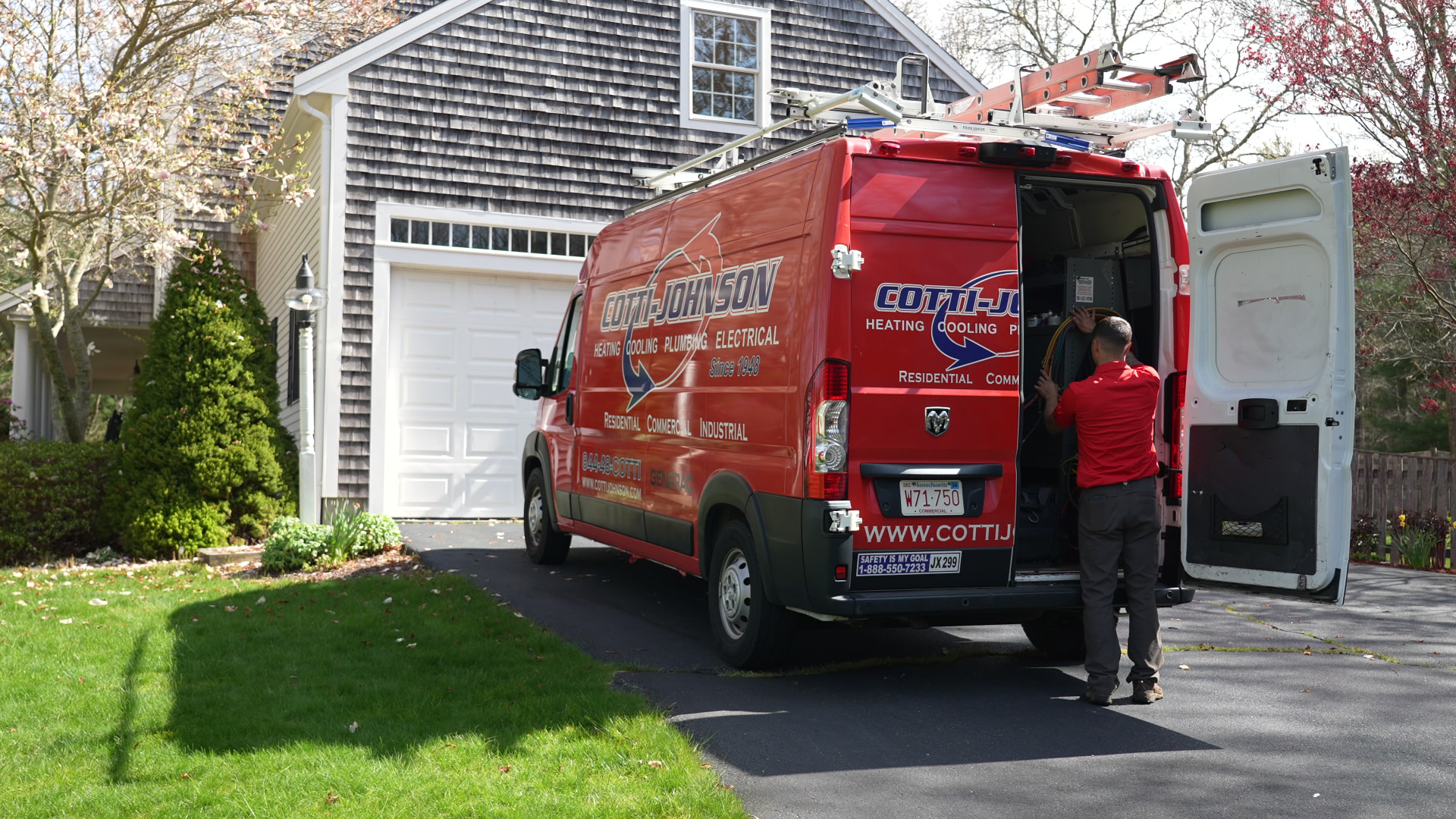
AI search is changing how customers find local businesses — but it doesn't mean abandoning SEO or writing for robots. It means making your business easy to understand online.
AI search is changing how customers discover local businesses, but it does not mean local companies need to abandon SEO or start creating content for robots. For HVAC, plumbing, electrical, roofing and other local service businesses, the practical response is straightforward: make your business easy to understand online.
Search is changing — but don't throw out everything you know about SEO
For years, local search was fairly easy to visualize. A homeowner needed an AC repair, plumber or electrician. They opened Google and searched something like “AC repair near me.” Google returned ads, local map results and organic listings, and the homeowner chose where to click.
That journey is becoming more conversational. Someone can now ask: “Who is a reputable HVAC company near me that offers financing and can replace my system this week?” Or: “My water heater is 12 years old and making a popping sound. Should I repair it or replace it, and who nearby can help?”
AI-powered search systems can interpret these more complicated questions, gather information and assemble an answer rather than simply presenting a page of links. Google says its AI features can perform multiple related searches across subtopics and sources — a process it calls “query fan-out” — to construct responses and identify supporting web pages. ChatGPT search can similarly provide timely answers with links to web sources.
For local service companies, that's the important change: your next customer may not search for your business with a simple keyword. They may describe their entire problem and ask an AI system who can solve it.
So, what are SEO, AEO and GEO?
You're going to hear a lot of new acronyms. SEO — Search Engine Optimization — is helping your website and business become discoverable through traditional search engines. AEO — Answer Engine Optimization — is creating clear, useful information that can effectively answer people's questions. GEO — Generative Engine Optimization — is improving how clearly your business, expertise and content can be understood and potentially referenced within generative AI experiences.
These concepts overlap considerably. In fact, Google specifically says that its established SEO best practices remain relevant to its generative AI features and that there are no special technical requirements or special schema needed just to appear in AI Overviews or AI Mode.
That's worth emphasizing because there's already a lot of noise surrounding AI search. You don't need to abandon SEO for some mysterious new form of “AI optimization.” You need to get the fundamentals right — and get much better at communicating what your business actually knows and does.
“Local businesses don't need to start creating content for machines. They need to do a better job documenting the real expertise, people, services and answers that already exist inside their business. Make that information useful to people first, and make it easy for search and AI platforms to understand.” — Jan Ruley, Founder, Unruly Content
AI search makes your entire digital footprint more important
One mistake would be thinking AI search is simply about your website. Your website matters — a lot — but your business exists across a larger digital ecosystem.
Google says Business Profile information can be assembled from information supplied by the business, publicly available web content, third-party data, user contributions such as photos and reviews, and other signals. For traditional Google local results specifically, Google says its primary ranking considerations are relevance, distance and prominence, and recommends keeping Business Profile information complete and accurate. Reviews and links are among the signals associated with prominence.
That makes consistency across your digital footprint increasingly important. If your website says you serve one set of cities, your Google profile communicates something different, your service pages are several years old, and your social channels barely show what you do, you're making it harder — not easier — for customers and digital systems to understand your business.
- Website and service pages
- Google Business Profile
- Reviews
- Business listings and citations
- Facebook and Instagram presence
- LinkedIn presence
- Photos and videos
- Local mentions and links
- Articles and FAQs
- Owner and employee expertise
Authentic content has become more valuable, not less
Ironically, the explosion of AI-generated content makes authentic business content more interesting. Google's current guidance for generative AI search emphasizes valuable, unique, non-commodity content and says people-first content and established SEO fundamentals remain important.
For a home service company, you have a major advantage: you're surrounded by original content every day. Consider a plumber replacing a 15-year-old water heater. Instead of posting one photo and moving on, that real job could produce:
That's not content manufactured for an algorithm. It's first-hand expertise documented from something your company actually did. And that distinction is going to matter.
- A short video: why was the water heater replaced?
- A website FAQ: how long do water heaters typically last?
- A Google Business Profile post: recent water heater replacement in your service area
- A Facebook or Instagram post: before-and-after photos and homeowner education
- A Reel: three signs your water heater may be approaching replacement
- A website article: repair vs. replacement considerations for an aging water heater
- A technician quote: what maintenance can extend water heater life?
Your technicians may be one of your best content resources
Local service companies have something most national publishers don't: people who answer real customer questions every day. Your HVAC technicians know what homeowners ask when an AC stops cooling. Your plumbers know which water heater problems customers ignore too long. Your electricians know which warning signs homeowners misunderstand. Your CSR team knows what customers ask before they'll schedule. Your owner probably has 10, 20 or 30 years of experience that exists almost entirely inside their head.
That's an enormous content library. The challenge is capturing it. Instead of asking “What should we post this week?”, ask “What did our customers ask us this week?” That's a much better starting point for modern content.
Answer specific questions clearly
AI-powered search is particularly suited to nuanced, conversational questions — Google describes AI Mode as useful for queries involving exploration, reasoning and complex comparisons. So your content should address the questions customers actually ask.
An HVAC company could answer: How much does it cost to replace an HVAC system in North Texas? Should I repair or replace a 15-year-old AC? Why does my AC run but not cool my house? How long should an HVAC system last in Texas? Does replacing my HVAC system lower my electric bill?
A plumber could answer: How do I know if my main sewer line is clogged? Is a tankless water heater worth it for a family of five? Why does my water heater make a popping noise? How much does slab-leak repair cost?
The goal isn't to stuff a particular phrase into a page 14 times. It's to provide a clear, accurate and genuinely useful answer from someone who understands the subject.
Don't create separate “AI content”
This is an important distinction. You don't need one strategy for Google, another for ChatGPT, another for social media and another for your website. Build a content system.
Start with something real — one job, one customer question, one technician interview, one owner conversation. Then intentionally distribute that knowledge: a real customer question becomes a technician answering it on video, a 60-second Reel, Facebook and Instagram posts, a Google Business Profile update, a website FAQ, a longer educational article, a LinkedIn insight — and useful, indexable information available to search and AI systems.
That's the shift local businesses should be making. Not more content. More intentional content.
Make your business information unmistakably clear
There are some less glamorous fundamentals that matter too. Your website should make it easy to determine who you are, what you do, where you provide those services, who you serve, what makes your company credible, and how someone can contact or hire you.
Keep your Google Business Profile accurate and complete. Make important information available as actual text — not buried exclusively inside graphics or video. Use relevant high-quality images and video, maintain sensible internal links, and ensure structured data accurately reflects what's visible on the page. Those are all consistent with Google's current recommendations for visibility across traditional and AI-powered search.
For ChatGPT search specifically, OpenAI says public websites can appear in search and recommends allowing its OAI-SearchBot if publishers want their content to be discoverable, surfaced and cited.
AI visibility is becoming measurable
This isn't entirely theoretical anymore. Microsoft introduced AI Performance in Bing Webmaster Tools in 2026, allowing publishers to see when their pages are cited in supported AI-generated answers, which pages receive citations, and some of the phrases associated with that activity. Google has also introduced dedicated generative-AI performance reporting in Search Console for visibility within features such as AI Overviews and AI Mode.
So the conversation is beginning to move from “Are AI platforms finding my business?” toward “Where is my content actually appearing within AI-driven discovery?” That will make AI visibility increasingly useful to measure alongside traditional search rankings, impressions, website traffic, calls, forms and booked jobs.
What should a local service business do right now?
Don't panic about GEO. And don't pay someone simply because they promise to “rank you #1 in ChatGPT.” Instead, concentrate on building a stronger and clearer digital footprint.
Keep your business information accurate. Maintain your Google Business Profile. Strengthen important service and location content. Answer real customer questions. Gather reviews. Publish original photography and video. Capture technician and owner expertise. Refresh outdated information. And connect those efforts through a consistent content strategy.
Most importantly: document what's real. The companies with the most useful digital footprints aren't necessarily going to be the companies producing the largest volume of content. They'll be the businesses doing the best job of turning their real-world expertise into information people — and increasingly machines — can understand.
Frequently asked questions
What is AI search?
AI search uses artificial intelligence to help interpret a user's question and generate or organize an answer, often using information retrieved from web sources. Examples include Google's AI Overviews and AI Mode, ChatGPT search, and AI-powered experiences from Microsoft.
Is SEO still important with AI search?
Yes. Google explicitly states that SEO best practices remain relevant to its generative AI search features because those experiences are connected to its existing Search systems and index.
Do local businesses need GEO in addition to SEO?
Local businesses should understand GEO, but they generally don't need to abandon traditional SEO or create an entirely separate content program. Strong technical accessibility, accurate business information, original useful content and established SEO practices remain foundational — Google says no special schema or AI-specific file is required for inclusion in AI Overviews or AI Mode.
Can my local business appear in ChatGPT search?
Yes. OpenAI says any public website can potentially appear in ChatGPT search. Website owners who want content to be discoverable and eligible to be surfaced and cited should ensure they aren't blocking OAI-SearchBot. Appearance is not guaranteed.
Does Google Business Profile matter for AI search?
For Google's ecosystem, keeping Business Profile information current is explicitly included in Google's guidance for AI features, and Business Profile remains important to traditional local Search and Maps visibility.
What kind of content should an HVAC, plumbing or electrical company create for AI search?
Prioritize first-hand, useful content based on real customer needs: service information, common questions, repair-versus-replacement explanations, technician insights, project examples, maintenance advice, local considerations, original photos and videos, and clear information about where and how the company operates. Google recommends unique, valuable, people-first content rather than commodity content created simply to manipulate visibility.
Should we publish AI-generated blogs to improve AI visibility?
Using AI as a research, organization or drafting tool can improve efficiency, but simply producing large quantities of generic content isn't a sound visibility strategy. The stronger approach is to capture original expertise and create content that provides something useful and specific that generic material cannot.
How do I know whether AI platforms understand my business correctly?
Periodically search for your company and ask realistic service questions across the major platforms. Check your website and Business Profile for inaccurate or inconsistent information. You can also use available reporting: Microsoft now provides AI citation information through Bing Webmaster Tools, and Google provides generative-AI visibility reporting through Search Console.
What is the best AI search strategy for a local service company?
Start with the fundamentals: accurate business information, a technically accessible website, strong service content, an optimized Google Business Profile, customer reviews, original local content, real expertise and consistent publishing. Then measure how that content performs across both traditional and AI-powered discovery rather than chasing shortcuts.
Sources
- Google for Developers — guide to optimizing for generative AI features; AI features and your website documentation; local ranking guidance
- OpenAI Help Center — publisher guidance for ChatGPT search
- Bing Blogs — AI Performance in Bing Webmaster Tools